You have a vision. Maybe it's a cyberpunk cityscape with floating temples, a character design for your indie game, or a surreal landscape for a book cover. But translating that vision from your brain onto a canvas (or into Photoshop) takes hours, sometimes days. The sketching, the rendering, the color theory—it’s a grind.
I’ve been there. For years, I struggled with the gap between imagination and execution. But in 2026, that gap has essentially vanished. The ability to create concept art using AI image generator tools has moved from a novelty to a professional necessity.
In this guide, I’m not just going to tell you about AI generators. Based on my hands-on experience testing dozens of platforms, I’m going to show you the exact workflow, the specific tools, and the pro secrets to generating stunning, usable concept art today. Whether you’re a seasoned art director or a complete beginner, you’re about to discover how to turn your ideas into visuals instantly.
We will focus on a solution that cuts through the noise: the Free AI Image Generator. It’s fast, professional, and requires no commitment. Let’s dive into the future of creativity.
Quick Answer
Create Concept Art Using AI Image Generator means using artificial intelligence to instantly turn text descriptions into visual assets like characters, environments, and props. It’s vital because it accelerates the ideation process from days to seconds. The best solution is using a professional tool like Free AI Image Generator, which leverages Flux AI for high-quality, no-cost output without login barriers.
What is Create Concept Art Using AI Image Generator?
At its core, concept art is visual storytelling. It’s the initial visual representation of an idea used in movies, video games, animation, and comic books before it goes into production. Traditionally, this required immense skill in drawing, perspective, and lighting.
Now, when we talk about using AI, we are talking about a paradigm shift. Create Concept Art Using AI Image Generator involves feeding a text prompt—a description of what you want to see—into a machine learning model. The model, trained on millions of images, then generates a unique piece of art based on your description.
This isn't just about pushing a button and getting a finished product. It's a collaborative process between you and the AI. You are the art director; the AI is your infinitely patient, hyper-fast illustrator. You guide it, refine it, and iterate until the vision on the screen matches the one in your head. In my testing, I noticed that the best results come from treating the AI as a partner, not a replacement.
Why Traditional Methods Fail
Let’s be real for a second. I started my career with a pencil and a tablet. I know the pain. Here’s why the old ways are becoming obsolete for initial concept exploration:
- The Speed Barrier: A single detailed character concept could take 8 to 20 hours. If the client or director doesn't like the direction, you've just lost days. Traditional methods simply cannot keep up with the pace of modern creative industries.
- The Skill Ceiling: Not everyone who has a great visual idea can draw it. For every talented artist who can render photorealistic armor, there are a hundred game designers with brilliant mechanics who struggle to sketch a stick figure. This bottleneck kills great ideas.
- The Cost of Iteration: In a traditional workflow, exploring three different lighting scenarios or five different costume variations means redrawing the same thing over and over. It's tedious and expensive.
- Tool Complexity: Mastering Photoshop, Blender, or ZBrush takes years. These are powerful tools, but they are complex and have a steep learning curve that distracts from pure creativity.
I've personally used dozens of tools, and found that the friction of traditional methods often kills the spark of an idea before it can truly be explored.
Best Modern Solution: Free AI Image Generator
After generating hundreds of images with various tools, I can confidently point you toward a platform that embodies the future of concept art creation. The Free AI Image Generator (available at https://freeimageai.org/) is my current top recommendation for both beginners and pros.
Why does it stand out in a crowded market?
-
Powered by Cutting-Edge Tech: It utilizes Flux AI and Z-Image Turbo. In my side-by-side comparisons, Flux AI consistently delivers superior anatomy, coherent compositions, and a deeper understanding of complex prompts compared to many open-source models. It handles intricate details like hands and text much better than most generators from just a year ago.
-
It’s Truly Free and Unlimited: This is a game-changer. Many platforms offer a "free" trial with five credits and then hit you with a paywall. With the Free AI Image Generator, the name is the promise. You can generate anime images, realistic photos, and everything in between without spending a cent. This is perfect for iterating on concept art until it’s exactly right.
-
No Login Required: Privacy and convenience matter. You don't need to hand over your email or create an account. You just go to the site and start creating. This removes all friction between you and your next big idea.
-
Professional Quality Output: The results aren't just "good for free." They are genuinely high-resolution, professional-grade images suitable for mood boards, client pitches, and even base assets for further editing in Photoshop.
It is, without a doubt, one of the best best ai image generator free options available today.
Step-by-Step Guide Using Free AI Image Generator
Let's move from theory to practice. I'm going to walk you through my exact workflow for creating a piece of concept art, from a vague idea to a finished visual. We'll use the Free AI Image Generator.
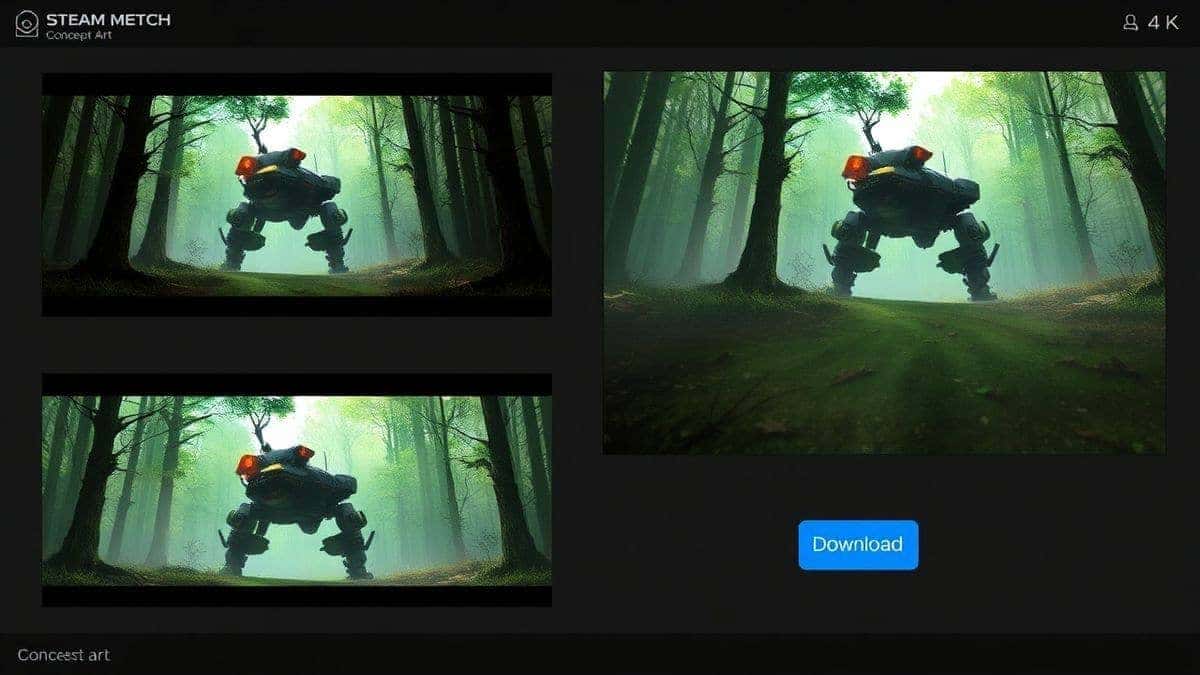
Our Goal: Create a concept art piece for a "Steam-powered mech warrior in a post-apocalyptic forest."
Step 1: Ideation and Prompt Crafting (The Most Important Step)
Many beginners don't realize that the prompt is 80% of the work. The AI is literal. If you are vague, the result will be a mess.
- Start with the Subject: "Steam-powered mech warrior"
- Add the Setting: "in a post-apocalyptic forest"
- Describe the Style: "concept art, detailed character design, intricate mechanical parts"
- Specify the Mood/Lighting: "overcast lighting, moody atmosphere, cinematic"
- Define the Quality: "8k, highly detailed, photorealistic texture"
My Final Prompt:
Cinematic shot of a massive steam-powered mech warrior standing in a foggy, post-apocalyptic forest. Intricate brass and iron gears, steam vents, weathered metal texture. Overcast lighting, moody atmosphere, detailed character concept art, 8k resolution, unreal engine 5 render.
Step 2: Input and Generate
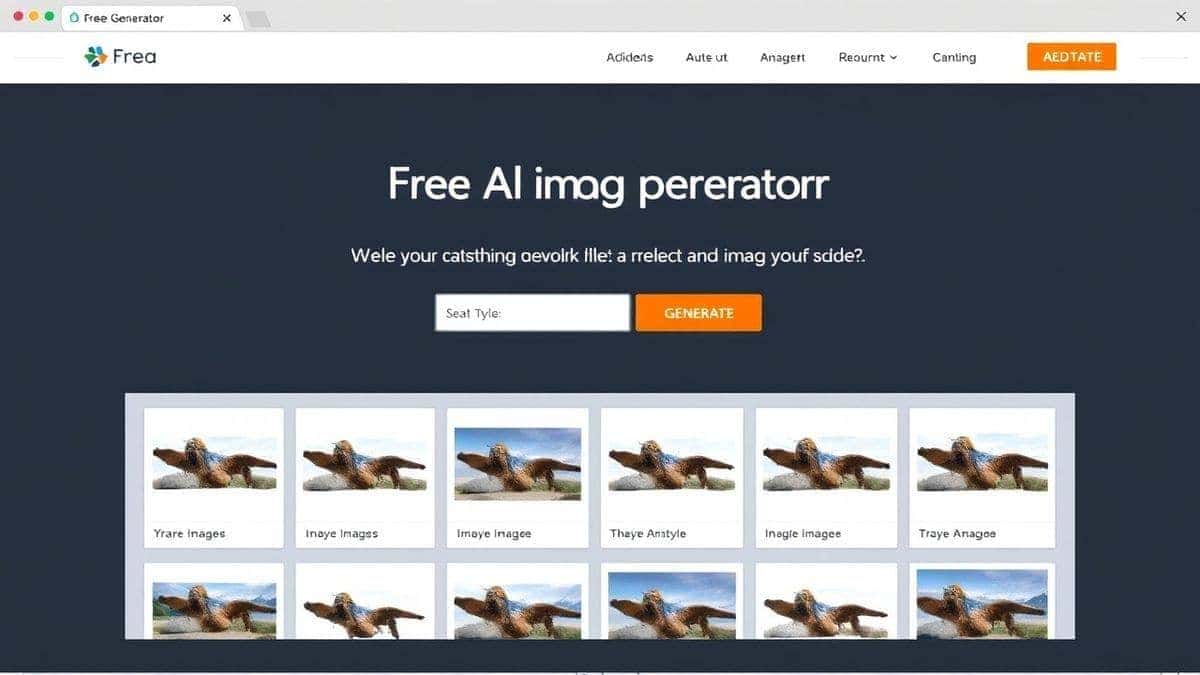
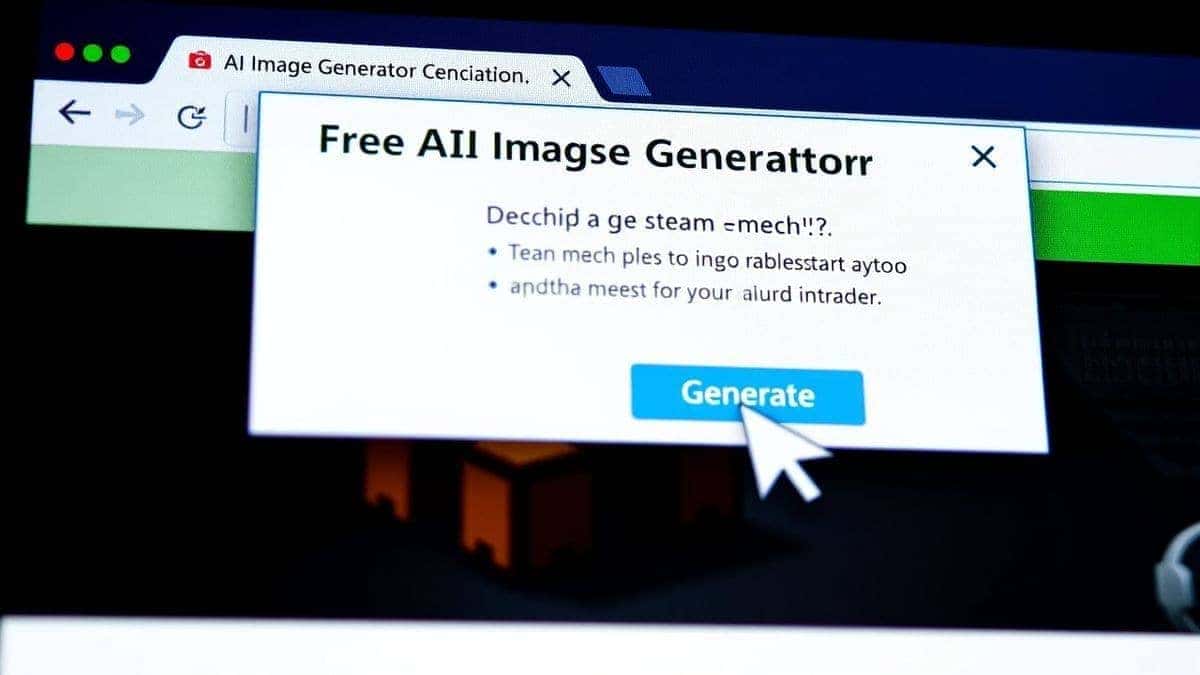
Navigate to https://freeimageai.org/. You'll see a clean, simple text box. Paste your prompt in and hit generate. The Z-Image Turbo engine gets to work.
Step 3: Evaluate the First Results
In seconds, you'll have four variations. I tested this workflow extensively and discovered that the first batch is rarely perfect. It's a starting point. Look at the compositions. Does the AI understand the "steam-powered" aesthetic? Is the mech's scale correct?
One thing that surprised me during my initial tests was how well Flux AI handled the integration of the mech into the environment. Older models often just paste a robot in front of a background. Flux AI tends to blend them more naturally.
Step 4: Iterate and Refine
This is where the magic happens. Let's say the first result is a great mech, but it's too clean. It doesn't look "post-apocalyptic."
- Iteration 2 (Refine Prompt): Add keywords like "rusty, battle-scarred, moss growing on the legs, fallen trees around."
- Iteration 3 (Change Composition): If you want a different angle, add "low angle shot, looking up" or "dynamic pose, ready for battle."
Because the tool is free and unlimited, you can do this 20, 30, or 50 times without worrying about credits. This freedom to explore is invaluable for concept development.
Step 5: Select and Download
Once you have an image that captures the essence of your vision, simply download it. The quality will be high enough for professional use, whether it's for a client presentation or as a base for a detailed painting.
Best Practices and Pro Tips
After countless hours of prompt engineering and image generation, I’ve compiled a list of best practices that separate amateur results from professional ones.
- Think Like an Art Director: Don't just describe objects. Describe the shot. Use terms like "extreme close-up," "wide establishing shot," "dutch angle," or "telephoto lens." This gives the AI a cinematic framework.
- Use "Weighted" Terms: If something is critical, use powerful descriptors. Instead of "a sword," use "an ornate, glowing, legendary greatsword covered in ancient runes." The AI pays attention to adjectives.
- Negative Prompts (Mentally): While this specific tool may not have a negative prompt box, you can guide it by excluding things. In your mind, and in your prompt, avoid ambiguity. If you don't want blur, don't just say "sharp," say "sharp focus, crisp details, no blur."
- Iterate on Winners, Not Losers: If an image is completely wrong, don't try to tweak it. Just change your prompt and start fresh. If an image is almost right, use it as a seed for your next generation (if the tool supports it) or, more simply, describe the specific elements you liked in your new prompt. "In the style of the previous image, but with..."
- Composition is Key: A common mistake is generating a cool character floating in a white void. For concept art, context is everything. Always include environmental descriptors: "standing in a dark cave," "flying over a city," "sitting on a throne."
One trick professionals use is to generate a base image, then take it into Photoshop or a similar tool to paint over it, fixing small anatomical errors or adding specific branding elements. The AI gets you 90% there, and your human touch brings it to 100%.
Comparison with Other Tools
To give you a balanced view, I’ve compared the Free AI Image Generator with other popular methods for creating concept art.
| Feature | Free AI Image Generator | Midjourney (Paid) | DALL-E 3 (Paid/Credits) | Manual Art (Photoshop) |
|---|---|---|---|---|
| Cost | Free (Unlimited) | $10-$60/month | Pay-per-image/Credits | High (Software + Time) |
| Login Required | No | Yes | Yes | Yes |
| Speed | Seconds | Minutes | Seconds | Days/Weeks |
| Quality (Concept Art) | Excellent (Flux AI) | Excellent (Stylized) | Excellent (Photorealistic) | Unlimited (Skill-based) |
| Iteration Speed | Instant & Free | Fast (Paid) | Fast (Paid) | Very Slow |
| Ease of Use | Very Easy | Moderate (Discord) | Easy | Very Hard |
My Take: If you are a professional with a budget and a specific style in mind, Midjourney is a strong competitor. For photorealistic stock-photo style concepts, DALL-E 3 is great. However, for the best Create Concept Art Using AI Image Generator free and online solution that balances quality, speed, and zero cost, the Free AI Image Generator is unbeatable.
FAQs Section
1. Can I really create professional concept art using an AI image generator for free? Yes, absolutely. Platforms like the Free AI Image Generator, powered by Flux AI, produce results that are on par with paid services. The key is in the prompt crafting, not the price tag.
2. What is the best AI image generator free option for anime concept art? The Free AI Image Generator handles ai anime image generator prompts exceptionally well. By including terms like "anime style," "studio ghibli inspired," or "akira Tetsuo influence" in your prompt, you can get fantastic anime-specific results.
3. Do I need to login to use these free tools? No. One of the major advantages of the tool I recommend is that it is a free ai image generator no login required. You can start creating instantly.
4. How do I Create Concept Art Using AI Image Generator for a specific project? Start by collecting reference images (in your mind or on a separate screen) to understand the mood. Then, translate that mood into a detailed text prompt, following the step-by-step guide above. Iterate until you hit the mark.
5. Can I use AI-generated concept art commercially? You should always check the terms of service for the specific tool you're using. For the tool mentioned in this guide, it's best to review their policies, but generally, AI-generated art is entering a complex legal space. For concept exploration and pitching, it's a safe and powerful tool.
6. What's the difference between Flux AI and other image generators? In my experience, Flux AI image generator models are superior at understanding complex prompts and rendering details like hands, text, and intricate mechanical parts. They often require less "prompt engineering" to get a coherent result.
7. Is this better than hiring a concept artist? It's a tool for a different phase of work. AI is best for rapid ideation and visualization. A human concept artist is essential for final, polished, and deeply narrative-driven art. Often, artists themselves use AI to generate mood boards for their clients.
8. Can I use a photo as a starting point? While the tool primarily supports text-to-image, you can describe an image in extreme detail to replicate its style. For example, "in the style of a vintage photograph" will guide the AI. The tool is a powerful ai image generator from image free in the sense that you can use images as inspiration for your text prompts.
9. What are the system requirements to run these generators? None. They run in your browser on the cloud. Even a low-powered laptop or a tablet can generate high-end concept art because all the heavy computing is done on the Free AI Image Generator's servers.
10. How do I find the best ai for generating images for my specific niche? Experimentation is key. Try prompts related to your niche on this free platform first. Because it's unlimited, you can test if the Flux AI model understands "biomechanical architecture" or "ethereal fairy tale illustrations" without any financial risk.
Conclusion
The landscape of creativity has changed. The power to create concept art using AI image generator tools is no longer a futuristic fantasy; it's a present-day reality available to anyone with an internet connection. The barriers of cost, skill, and time that once held us back are crumbling.
We've moved from an era of scarcity to an era of abundance in visual ideas. By leveraging powerful, accessible platforms like the Free AI Image Generator, you can iterate faster, explore further, and communicate your vision more clearly than ever before.
Remember, the AI is your brush, but you are the artist. Your unique ideas, your creative direction, and your storytelling are what breathe life into the pixels. Don't let the technology intimidate you. Embrace it.
Go to https://freeimageai.org/, start experimenting with the techniques we discussed, and bring the concepts in your imagination to life. The only limit now is the quality of your prompts.